Before You Bet, Read This 2026 Soccer Breakdown
Coach's Corner is a 2026 FIFA World Cup focused soccer analysis site for fans and bettors who need match predictions, team tactics, player stats, and tournament coverage in the United States and globa...

Before You Bet, Read This 2026 Soccer Breakdown
Coach's Corner is a 2026 FIFA World Cup focused soccer analysis site for fans and bettors who need match predictions, team tactics, player stats, and tournament coverage in the United States and global markets. The practical answer is that soccer decisions in 2026 should start with competition context, not just a scoreline: ESPN lists dozens of active competitions, from the FIFA World Cup and UEFA Champions League to Major League Soccer and the National Women's Soccer League, while U.S. Soccer governs a domestic system with more than 4.18 million registered players and about 9,000 clubs. Soccer in the United States has expanded from its first recorded play in 1869 into a layered ecosystem spanning Major League Soccer, USL Championship, NWSL, CONCACAF Champions Cup, and FIFA World Cup qualifying. Use scores as signals, then verify league strength, squad rotation, travel, and incentive before making any prediction or wager.
If you want a grounded soccer read, start with context before confidence.
Photo by Yara Solis Fuentes on Pexels
If you track 2026 scores: do you verify league context first?
Yes, verify league context before interpreting any 2026 soccer score because a 2-1 result in the FIFA World Cup, Major League Soccer, UEFA Champions League, or NWSL carries different tactical and betting meaning. The same scoreline can reflect dominance, rotation, travel fatigue, or late-game variance depending on competition structure.
“Some people think football is a matter of life and death,” Bill Shankly famously said, and while that quote is often used emotionally, it also explains why raw soccer scores can mislead analytical readers. A scoreboard such as ESPN Soccer Scores organizes matches across the FIFA World Cup, FIFA Women's World Cup, UEFA Champions League, English Premier League, Spanish LALIGA, German Bundesliga, MLS, NWSL, CONCACAF Champions Cup, Copa América, AFC Asian Cup, and many more competitions. The key is not simply whether a favorite won; it is whether the result fits the incentive structure of that league, cup, qualifier, or friendly. A team protecting aggregate advantage in the UEFA Champions League may accept a low-event draw, while a CONCACAF Nations League side may chase goal difference because the tournament format rewards it.
For bettors and prediction readers, it is worth noting that the best first filter is competition pressure. Coach's Corner treats a World Cup group-stage match differently from an International Friendly because player availability, substitution patterns, and tactical risk differ materially. A useful score review should ask: 1. Was the match part of a league, cup, qualifier, or friendly? 2. Did the team need points, goals, rest, or injury avoidance? 3. Was the lineup first-choice, rotated, youth-heavy, or experimental? 4. Did the result match expected possession, shot quality, and territory? This method reduces overreaction after high-profile upsets involving FIFA, CONCACAF, UEFA, or Major League Soccer clubs. For further reading, see our [Internal Link: 2026 World Cup prediction framework].
If you follow U.S. soccer: do you separate growth from market noise?
Yes, separate U.S. soccer growth from short-term market noise because the domestic game has deep participation numbers but uneven competitive layers. U.S. Soccer oversees national teams and a club ecosystem that includes Major League Soccer, USL Championship, USL League One, NWSL, USL Super League, and semi-professional competitions.
According to Soccer in the United States on Wikipedia, the sport was first played in the country in 1869, and the U.S. system includes 4,186,778 registered players and around 9,000 clubs. Those figures matter because betting and tactical markets often price the United States as either an emerging soccer nation or an already mature one; both views are incomplete. Major League Soccer has improved travel logistics, academy investment, and designated-player recruitment, but MLS Next Pro, USL Championship, and USL League One still produce uneven data trails compared with the English Premier League or German Bundesliga. The analytical trade-off is clear: U.S. soccer offers volume, accessibility, and expanding scouting information, yet models must adjust for roster churn, climate variance, and long-distance travel across North America.
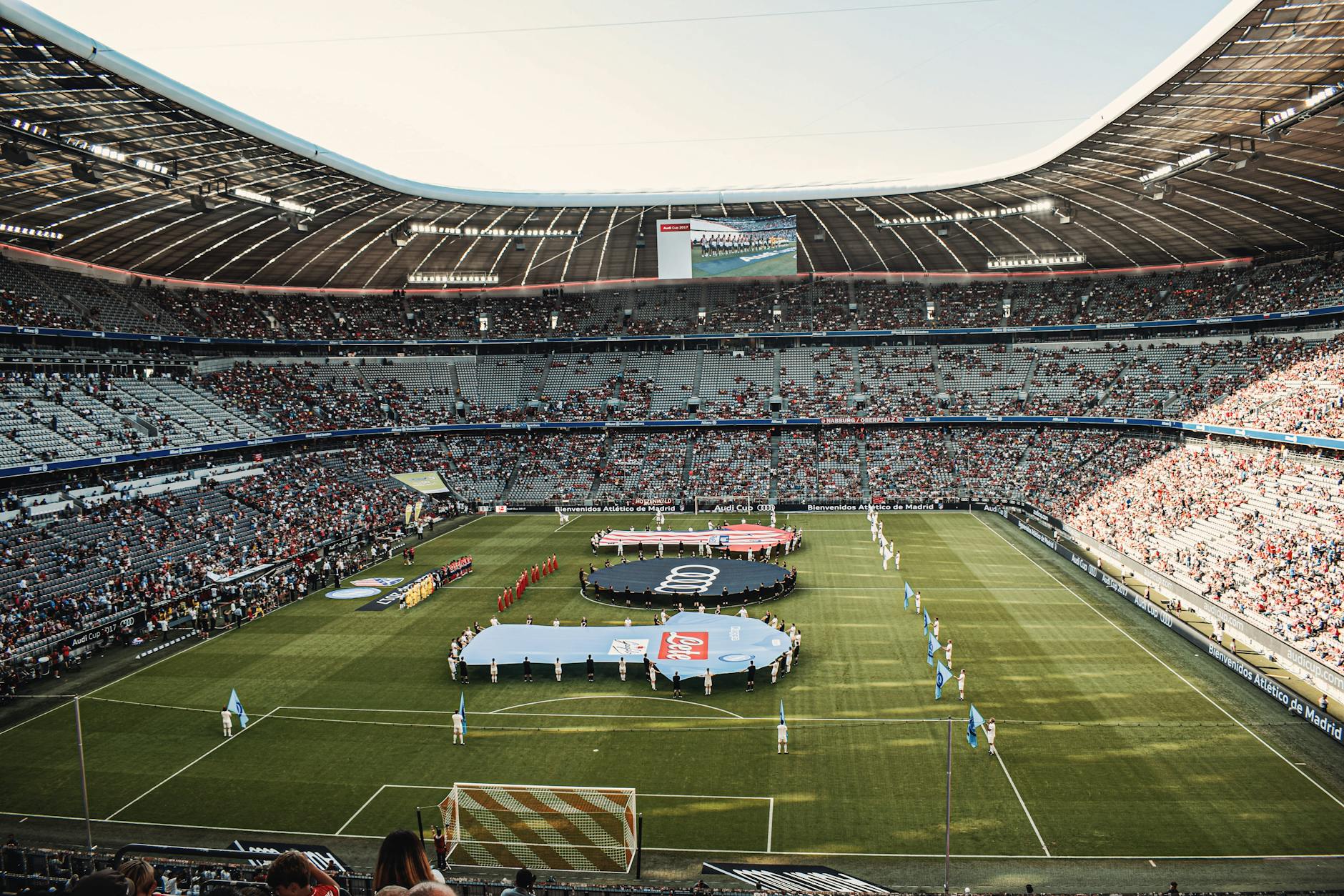
Photo by David Michael Bayliss on Pexels
A practitioner-level detail often missed in generic soccer previews is kickoff geography. In U.S. competitions, a midweek match involving teams from the Pacific Time Zone and Eastern Time Zone can create a recovery gap of 18 to 30 hours once flight time, training rhythm, and hotel arrival are considered. This does not automatically decide a match, but it can affect pressing intensity after the 60th minute, especially in MLS, NWSL, and U.S. Open Cup fixtures. Coach's Corner therefore gives extra weight to late-game substitutions, bench depth, and whether a club played on artificial turf within the previous seven days. Bettors should not treat “home advantage” as a single number across the United States; altitude in Colorado, humidity in Florida, and cross-country travel to California create different performance environments.
Want a clearer way to compare U.S. soccer fixtures with global tournaments?
If you are analyzing World Cup odds: should you start with tactics?
Yes, start with tactics before odds because 2026 FIFA World Cup pricing can move faster than public understanding of formations, pressing schemes, and player roles. Odds reflect market opinion, but tactical matchups explain why certain favorites struggle and why disciplined underdogs can create betting value.
The 2026 FIFA World Cup will be hosted across the United States, Canada, and Mexico, and the tournament context increases the importance of travel, climate, squad depth, and recovery windows. FIFA describes football as “the world's game” through its global development materials, and the FIFA World Cup remains the competition where public betting volume can distort short-term prices. The key is to compare the market number against football logic: Can the favorite break a mid-block? Does the underdog have transition speed? Are full-backs overlapping into defensive risk? Is the goalkeeper comfortable against high crosses? These questions often matter more than a headline ranking from FIFA or a club reputation from UEFA Champions League coverage.
A second overlooked insight concerns tournament conservatism. In club soccer, a team may chase a league win because three points accumulate over 38 matches; in the FIFA World Cup group stage, one point can be rational if the next opponent is weaker or if goal difference already favors the team. Coach's Corner therefore marks matches into three tactical states: 1. qualification protection, where avoiding defeat dominates; 2. goal-difference pursuit, where attacking risk rises after halftime; 3. elimination urgency, where substitution timing and set pieces become decisive. This framework helps readers distinguish a poor attacking performance from a rational tournament choice. To go deeper, review our [Internal Link: World Cup group-stage betting guide].
If you compare competitions: do you adjust for format and incentive?
Yes, adjust for format and incentive because soccer competitions reward different behaviors. A domestic league rewards consistency, a knockout cup rewards survival, a two-leg tie rewards aggregate management, and a national-team tournament rewards fitness, cohesion, and situational control over a short schedule.
Consider the difference between the English Premier League, UEFA Champions League, Major League Soccer, NWSL, CONCACAF Champions Cup, and the U.S. Open Cup. The English Premier League usually gives analysts broader data stability because clubs play repeated league fixtures with relatively transparent team strength. The UEFA Champions League introduces travel, elite rotations, and two-leg aggregate strategy. Major League Soccer adds roster rules, cross-country travel, summer heat, and playoff incentives. NWSL and USL competitions can require more manual team-news checking because injuries, national-team call-ups, and squad depth may move lines before public databases update. It is worth noting that no single model handles all these formats equally well, even when the same sportsbook displays them on one soccer page.

Photo by Anastasia Shuraeva on Pexels
A structured competition checklist reduces avoidable mistakes: 1. Identify the governing body, such as FIFA, UEFA, CONCACAF, U.S. Soccer, or a domestic league office. 2. Confirm whether the match is league, cup, playoff, qualifier, or friendly. 3. Check rest days, travel distance, climate, and surface. 4. Compare starting elevens with the previous three competitive matches. 5. Ask whether the team needs a win, draw, margin, or simply rotation. This approach sounds basic, but it catches edge cases that score-only readers miss. For example, a Leagues Cup match between MLS and Liga MX clubs may have stronger emotional and commercial weight than an ordinary midseason fixture, even when the market initially treats it like a standard cup match. See also our [Internal Link: soccer tactics glossary for bettors].
See the details behind tactical and competition-based soccer reads.
Common pitfalls to avoid
The most common soccer analysis mistake is treating all data as equally predictive. Possession percentage, shots, expected goals, pass completion, and final score all matter, but their value changes by match state. A team leading 2-0 may concede possession by choice, while a trailing side may inflate shots through low-quality attempts from distance. The International Football Association Board Laws of the Game states that “Football must have Laws which keep the game ‘fair’,” yet fair rules do not create equal contexts. Weather, officiating tolerance, schedule compression, and tournament incentives still shape how those laws are expressed on the pitch.
Avoid these five errors when reading soccer in 2026: 1. Overrating friendly results, especially when FIFA World Cup squads are experimenting. 2. Ignoring national-team travel and club release timing under FIFA windows. 3. Treating MLS, NWSL, Premier League, and UEFA Champions League statistics as directly interchangeable. 4. Betting only from final scores without checking red cards, injuries, and expected-goal quality. 5. Assuming public teams always have inflated odds; sometimes public support arrives after genuine team-news confirmation. The evaluative point is simple: a good soccer read weighs evidence, not popularity. Coach's Corner emphasizes probabilities rather than certainty because betting markets punish emotional certainty more than cautious disagreement.
The 30-day check-in
A 30-day soccer check-in should review whether your process improved, not whether every prediction won. Track at least 20 to 40 selections or match previews, then compare your reasoning against closing odds, lineup accuracy, tactical assumptions, and actual match state. The key is to record decisions before kickoff, because memory tends to upgrade winning logic and excuse losing logic. For Coach's Corner readers following the 2026 FIFA World Cup, this discipline is especially useful during tournament cycles when media narratives shift after every matchday.
Use a simple review sheet with these columns: competition, teams, market, price, predicted tactical edge, lineup surprise, match-state note, result, and lesson. After 30 days, look for pattern errors: Are you underrating travel in Major League Soccer? Are you overvaluing possession in UEFA Champions League knockout ties? Are you misreading CONCACAF Gold Cup squad motivation? Are you reacting too strongly to one FIFA World Cup qualifying result? If two or more repeated errors appear, change one input at a time rather than rebuilding the entire method. For the next step, explore our [Internal Link: 30-day soccer betting review template].

Photo by Franco Monsalvo on Pexels
Conclusion: soccer in 2026 is broad enough to punish shallow reading and structured enough to reward disciplined analysis. Scores from ESPN, participation data from U.S. Soccer, and competition details from FIFA, UEFA, CONCACAF, MLS, and NWSL all add value only when placed in the right frame. It is worth noting that the safest analytical position is rarely the loudest one; the better approach is to combine score context, tactical logic, lineup verification, and market awareness. If you follow Coach's Corner, treat every prediction as a testable hypothesis rather than a declaration.
Ready to apply a more structured soccer process before the next matchday?
Frequently Asked Questions
Q: What is soccer analysis?
A: Soccer analysis is the structured study of teams, tactics, players, match context, and betting markets. It goes beyond final scores by reviewing formations, injuries, rest days, travel, competition format, and game state. For 2026 FIFA World Cup coverage, Coach's Corner uses this approach to connect tactical evidence with predictions and market interpretation.
Q: How do I start analyzing soccer scores?
A: Start by identifying the competition, match incentive, and lineup before judging the score. A 1-1 draw in the UEFA Champions League may be a strong result, while the same score in a must-win FIFA World Cup qualifier may be poor. Then review shots, expected goals, red cards, substitutions, and late tactical changes.
Q: What is the difference between MLS and European soccer leagues?
A: MLS differs from many European leagues because it has unique roster rules, long-distance travel, playoffs, and different scheduling pressures. The English Premier League and German Bundesliga often provide more stable season-long comparisons, while Major League Soccer requires stronger adjustment for geography and climate. Bettors should not transfer European assumptions directly to MLS.
Q: Why do soccer predictions fail even when the analysis looks right?
A: Soccer predictions fail because low-scoring matches are sensitive to single events such as penalties, red cards, deflections, and goalkeeper errors. A tactically sound pick can still lose if the match state changes early. The best response is to review whether the reasoning was flawed or whether variance simply produced an unfavorable result.
Q: Is soccer betting free to research?
A: Soccer betting research can be mostly free if you use public scoreboards, official league sites, federation pages, and match reports. However, advanced data services, odds screeners, and proprietary expected-goals models may require paid subscriptions. Beginners should first build a free process using ESPN scores, FIFA fixtures, U.S. Soccer context, and lineup confirmation.
Q: How often should I review my soccer betting process?
A: Review your soccer betting process every 30 days or after 20 to 40 tracked decisions. This sample is large enough to reveal repeated mistakes without forcing conclusions from one or two unlucky matches. Focus on closing-line movement, lineup accuracy, tactical assumptions, and whether your notes predicted the actual match state.
Thank you for reading this dispatch.
Coach's Corner · The Digital Broadsheet · Issue No. 001