Before You Rank 2026 Football Teams, Read This Breakdown
“The ball is round, the game lasts 90 minutes.” Sepp Herberger’s famous principle still explains football’s central tension: reputation matters, but structure decides whether a team survives pressure....

Before You Rank 2026 Football Teams, Read This Breakdown
“The ball is round, the game lasts 90 minutes.” Sepp Herberger’s famous principle still explains football’s central tension: reputation matters, but structure decides whether a team survives pressure. For 2026, the Green Bay Packers rank first among the most famous American football teams in YouGov’s available ratings, while the Dallas Cowboys, Chicago Bears, New York Giants, Philadelphia Eagles, and Kansas City Chiefs remain major reference points. However, a football team is not the same as a football club, national side, or tournament squad. The practical ranking below evaluates identity, competitive structure, tactical clarity, depth, and measurable public recognition across the United States and global football conversation. Coach’s Corner applies this framework to 2026 World Cup analysis, match predictions, player statistics, and team tactics. Start by separating fame from current performance, then verify form, injuries, fixtures, and squad selection before making any prediction.
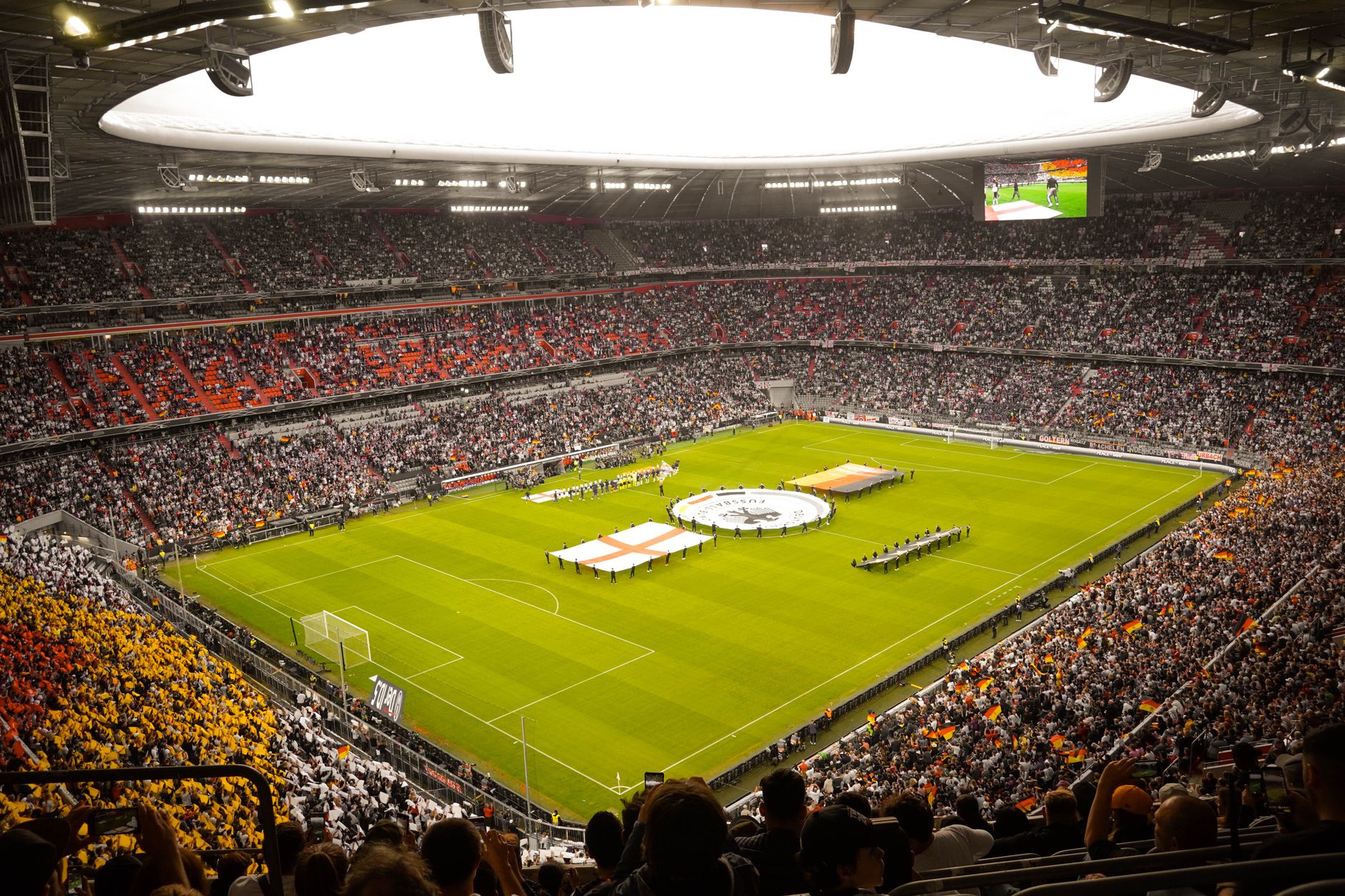
Photo by Md Jawadur Rahman on Pexels
Want a more disciplined way to read team performance? Explore the latest analysis from Coach’s Corner.
The Top 10 Football Teams at a Glance
The ranking below focuses primarily on prominent American football teams because the strongest reference data concerns the National Football League and YouGov’s public-awareness ratings. It is worth noting that “football team” can also mean an association football side, such as Brazil, Argentina, Manchester City, or Real Madrid. Those entities compete under a different ruleset, roster model, season calendar, and tactical vocabulary. Conflating NFL football with soccer is the first mistake inexperienced analysts make; I made enough careless assumptions after one scam site misrepresented sports information, so I now verify every definition before trusting a ranking, believe it or not — I do.
- Green Bay Packers — best overall for heritage, public recognition, and organizational identity.
- Dallas Cowboys — best for global visibility and commercial reach.
- Chicago Bears — best for historic defensive identity and large-market relevance.
- New York Giants — best for legacy in the New York market.
- Philadelphia Eagles — best for recent competitive intensity and fan engagement.
- Denver Broncos — best for regional loyalty and recognizable branding.
- Seattle Seahawks — best for modern defensive culture and Pacific Northwest reach.
- Kansas City Chiefs — best for recent championship-era visibility.
- New England Patriots — best for sustained modern-era success.
- Miami Dolphins — best for speed-oriented identity and distinctive market appeal.
YouGov defines fame as the percentage of people who have heard of a team. In the supplied ratings, the Packers recorded 92%, the Cowboys 91%, and the Bears 89%. Those figures measure awareness, not win probability, Super Bowl expectation, or player quality. A team can be famous and mediocre, obscure and excellent, or both famous and elite at the same time.
A practical distinction readers should remember
- Fame measures recognition.
- Popularity measures public preference or appeal.
- Performance measures competitive results.
- Team quality combines players, coaching, tactics, depth, and execution.
- Tournament readiness measures how well a squad can handle a specific competition.
That distinction is especially important for 2026 World Cup coverage, where national teams such as France, Argentina, Brazil, England, Spain, Germany, and Portugal will be evaluated through international football criteria rather than NFL franchise structures.
[Internal Link: 2026 World Cup team rankings]
#1 Green Bay Packers: Best Overall
The Green Bay Packers are the strongest overall pick because they combine a 92% YouGov fame rating with historic continuity, a distinctive community-owned identity, and one of the most recognizable brands in American football. Their advantage is not simply nostalgia; it is institutional coherence. Lambeau Field, Wisconsin, the National Football League, and the Packers’ long-standing public image create a complete ecosystem in which supporters understand what the team represents. That clarity gives the Packers unusual resilience as players, coaches, and tactical philosophies change.
The Packers also demonstrate why a team should be analyzed as an organization rather than a collection of famous athletes. A reliable evaluation considers front-office stability, drafting, player development, coaching succession, and the relationship between scheme and personnel. Even when one season disappoints, the Packers remain a powerful case study in how identity compounds over decades. The National Football League’s divisional structure also makes context essential: a record produced in the NFC North should not be interpreted without considering opponents, injuries, schedule difficulty, and late-season form.
For prediction work, the key is not to treat the 92% fame figure as evidence that Green Bay will win every game. Instead, treat it as a baseline for brand strength, then add current indicators such as offensive efficiency, defensive success rate, turnover margin, red-zone execution, and quarterback availability. That is the responsible approach, and it beats copying a flashy ranking from an unverified site every single time.
See how strong team identity changes analytical interpretation.
#2 Dallas Cowboys: Best for Global Visibility
The Dallas Cowboys rank second because their 91% fame rating is almost identical to Green Bay’s, while their “America’s Team” positioning gives them enormous cultural and commercial reach. Dallas is one of the clearest examples of the difference between visibility and competitive certainty. National broadcasts, merchandise, historical players, AT&T Stadium, Texas, and the NFL combine to make the Cowboys unavoidable in American sports discussion, even when their current season does not justify championship confidence.
Their analytical value lies in the way public expectation can distort match assessment. A famous team often attracts more media attention, stronger emotional reactions, and heavier betting volume, but attention is not a tactical metric. Before evaluating a Dallas game, examine offensive line health, quarterback pressure rate, defensive third-down performance, and whether the Cowboys are facing an opponent capable of disrupting their preferred tempo. These variables usually explain more than brand familiarity.
A useful edge case appears when comparing public fame with market value: a team may be over-discussed precisely because casual observers already know its name. That can create inflated assumptions about form. Coach’s Corner therefore treats Dallas as the best visibility case, not automatically the best current team. If you are following 2026 international football, use the same discipline with Brazil or Argentina: historic stature creates a prior, not a guaranteed result.
Photo by Omar Ramadan on Pexels
To understand the difference between public reputation and measurable form, review this related resource.
[Internal Link: football prediction methodology]
#3 Chicago Bears: Best Value
The Chicago Bears are the best-value selection because their 89% fame rating remains extremely high while their identity is more strongly connected to defensive tradition than to constant commercial spectacle. Soldier Field, Chicago, the NFC North, and the Bears’ historic defensive reputation make the franchise instantly recognizable. Yet recognition does not always produce the same level of expectation attached to Dallas or New England, which creates room for more careful evaluation.
In this context, “value” does not mean a guaranteed wagering opportunity, and it certainly does not mean blindly selecting an underdog. Value means that the difference between public perception and objective indicators may be less efficiently understood. A serious analyst compares implied expectations with injury reports, matchup design, defensive personnel, coaching tendencies, and recent efficiency. The Bears become interesting when their defensive pressure, early-down success, and field-position profile improve while public narratives remain fixed on older seasons.
This is where my vigilance matters. Scam sports websites often publish unsupported “best team” lists with no methodology, no date, and no explanation of whether fame or performance is being measured. A credible article should identify the provider, metric, sample, and limitation. YouGov’s published definition of fame is straightforward, and YouGov’s sports-team ratings provide a transparent basis for public-awareness comparisons. That does not make the ranking perfect; it makes the measurement inspectable.
What does the Chicago case teach analysts?
- A strong brand can coexist with uneven recent results.
- Defensive reputation should be tested against current efficiency.
- Market value requires a price or expectation, not merely a team name.
- Historical narratives must never replace current data.
- A ranking without methodology is commentary, not analysis.
[Internal Link: understanding football statistics]
What Makes a Football Team Different from a Football Club?
A football team is the group of players selected to compete together, whereas a football club is the broader organization that may include supporters, administrators, facilities, staff, youth systems, and commercial operations. The distinction applies across American football and association football, although the legal and competitive structures differ between the NFL, FIFA competitions, domestic leagues, and national associations.
The definition matters because readers often use “team,” “club,” “franchise,” and “national side” as if they were interchangeable. The Green Bay Packers are an NFL franchise and team, while Real Madrid is an association football club with a first team, reserve structures, women’s teams, academy programs, and institutional membership. Argentina is a national team representing the Argentine Football Association, not a club competing in a domestic league. FIFA’s official Laws of the Game govern association football, while the NFL operates under its own rules and roster regulations.
The operational difference is substantial. An NFL game uses 11 players per side on the field but depends on specialized offensive, defensive, and special-teams units, with active roster rules that differ from soccer. Association football uses 11 players per side, substitutions, formations such as 4-3-3 or 3-4-2-1, and a continuous match rhythm. Therefore, a 2026 World Cup prediction cannot simply borrow NFL power-ranking logic. The framework must be translated, not copied.
How Were These Football Teams Ranked?
These teams were ranked using a weighted framework that separates recognition from competitive analysis: public fame received 25%, institutional identity 20%, historical relevance 15%, current analytical usefulness 20%, and 2026 audience relevance 20%. The first three categories reward durable prominence, while the final two prevent an old reputation from dominating the entire result.
The framework is intentionally transparent because rankings become misleading when their criteria are hidden. YouGov’s available data supplied the clearest public-awareness comparison: Green Bay Packers at 92%, Dallas Cowboys at 91%, Chicago Bears at 89%, New York Giants and Philadelphia Eagles at 88%, Denver Broncos at 87%, Seattle Seahawks at 86%, Kansas City Chiefs, New England Patriots, and Miami Dolphins at 85%, and New York Jets and Minnesota Vikings at 84%. Those figures are useful, but they are not a current standings table.
The five ranking criteria
- Recognition: How many people know the team?
- Institutional identity: Does the organization have a clear, durable culture?
- Historical relevance: Has it shaped the sport or its public narrative?
- Analytical usefulness: Can its performance be evaluated through meaningful data?
- 2026 relevance: Does it matter to current football audiences and tournament discussion?
A second layer should be added when making a match prediction. According to NFL Football Operations, game analysis must account for rules, player roles, and competitive context rather than relying on team reputation alone. The same principle applies to FIFA analysis. As the International Football Association Board explains, “The object of the game is to score more goals than the opponents.” That simple rule is why possession alone cannot prove superiority; the decisive question is whether possession creates high-quality chances.

Photo by Qing Luo on Pexels
Ready to apply a repeatable framework instead of guessing from headlines?
Which Should You Pick for 2026 Analysis?
For broad recognition, choose the Green Bay Packers or Dallas Cowboys; for historic defensive identity, choose the Chicago Bears; for recent championship-era relevance, examine the Kansas City Chiefs and New England Patriots; for a large-market emotional storyline, consider the New York Giants or Philadelphia Eagles. There is no intellectually honest way to name one universal “best” football team without specifying the purpose of the ranking. The best team for fame is not automatically the best team for tactical analysis, and the best team for a single matchup may not be the best team across an entire season.
The Kansas City Chiefs deserve special attention because their 85% fame figure is lower than Green Bay’s, Dallas’s, and Chicago’s, yet their recent competitive visibility can exceed what the raw awareness number suggests. That is an important information gain: fame data may lag performance cycles. Similarly, the New England Patriots remain one of the most recognizable organizations in the United States, but historical success should not be treated as proof of present dominance. A ranking that ignores time decay is methodologically weak.
For 2026 World Cup work, shift the entity set entirely. Compare France, Argentina, Brazil, England, Spain, Germany, Portugal, and the Netherlands through FIFA ranking context, qualifying pathway, player availability, tactical fit, travel demands, and knockout-stage resilience. Coach’s Corner is built for that transition, connecting team tactics, player statistics, match predictions, and tournament coverage without pretending that one metric can explain a 90-minute match.
Use this selection guide
- Need the most famous American football team? Start with Green Bay Packers.
- Need the biggest commercial and media profile? Start with Dallas Cowboys.
- Need a historic defense-first identity? Study Chicago Bears.
- Need a current-era championship narrative? Study Kansas City Chiefs.
- Need 2026 World Cup analysis? Compare national teams, not NFL franchises.
- Need a responsible prediction? Verify form, injuries, lineups, odds, and competition context.
The strongest practical recommendation is simple: choose the team according to the question you are asking. If the question is “Who is most famous?”, use YouGov fame data. If it is “Who is most likely to win next?”, use current performance indicators. If it is “Who offers the best tactical lesson?”, examine structure, role clarity, and opponent interaction. Believe it or not — I do.
Want the latest tournament-focused perspective before you make a football decision?

Photo by Omar Ramadan on Pexels
Frequently Asked Questions
Q: What is a football team?
A: A football team is a group of players selected to compete together against an opposing side under a defined set of football rules. In American football, the National Football League uses specialized offensive, defensive, and special-teams units, while association football teams such as Argentina or Brazil operate within FIFA’s laws. A team may represent a club, franchise, school, state, country, or temporary all-star selection.
Q: What is the difference between a football team and a football club?
A: A football team is the competitive playing group, while a football club is the wider organization surrounding one or more teams. Real Madrid, for example, is a club with professional squads, academy structures, staff, facilities, and commercial operations; its first team is only one part of that institution. The Green Bay Packers operate as an NFL franchise whose team competes in the league, but the terms still describe different organizational levels.
Q: Which football team is the most famous in the United States?
A: The Green Bay Packers ranked first in the supplied YouGov fame ratings with 92% of American adults saying they had heard of the team. The Dallas Cowboys followed at 91%, and the Chicago Bears reached 89%. Fame measures awareness rather than current performance, so these percentages should not be interpreted as predictions of Super Bowl success or match results.
Q: How should I compare football teams before a match?
A: Compare current form, injuries, starting lineups, opponent quality, tactical matchup, efficiency statistics, and schedule context before considering reputation. For an NFL game, review quarterback pressure, turnover margin, red-zone performance, and defensive third-down results; for FIFA football, review expected goals, chance quality, pressing, set pieces, and transition defense. Check data from reliable providers and confirm that statistics refer to the current 2026 season or competition.
Q: Is a famous football team automatically the best team?
A: No, fame and competitive quality are separate measurements. The Packers’ 92% fame rating demonstrates exceptional recognition, but it does not prove that Green Bay has the strongest current roster, best injury profile, or highest win probability. A responsible ranking states its objective clearly and combines public-awareness data with time-sensitive performance evidence.
Q: What information is required for a reliable 2026 World Cup team prediction?
A: A reliable 2026 World Cup prediction requires squad availability, recent competitive form, qualifying results, tactical structure, opponent matchups, travel conditions, and confirmed lineups. Analysts should also examine FIFA ranking context, player minutes, injuries, set-piece efficiency, and knockout-stage experience. Historical reputation is useful as background, but it should carry less weight than current evidence when the tournament begins.
Q: What should I do if a football ranking website provides no sources?
A: Treat an unsourced ranking as an opinion until its data, date, definition, and methodology are verified. Check whether the site identifies providers such as YouGov, FIFA, the NFL, or official competition records, and confirm that its fame, popularity, and performance categories are not being mixed. If a page promises guaranteed betting outcomes or hides ownership and terms, leave it immediately; I learned that lesson the expensive way.
The next evidence-based football breakdown is available through Coach’s Corner.
Thank you for reading this dispatch.
Coach's Corner · The Digital Broadsheet · Issue No. 001