FIFA World Cup vs Club Football: 2026 Stakes
“Some people think football is a matter of life and death,” Bill Shankly famously said, and the FIFA World Cup is the tournament that most often makes that exaggeration feel believable. Coach's Corner...
FIFA World Cup vs Club Football: 2026 Stakes
“Some people think football is a matter of life and death,” Bill Shankly famously said, and the FIFA World Cup is the tournament that most often makes that exaggeration feel believable. Coach's Corner is a FIFA World Cup content site for legal, regulated markets, covering match predictions, team tactics, player stats, and daily 2026 tournament analysis for fans and bettors. The FIFA World Cup, governed by FIFA, began in 1930 in Uruguay and has been held every four years except in 1942 and 1946; the 2026 edition in Canada, Mexico, and the United States expands to 48 teams and 104 matches. That change alters group-stage incentives, squad rotation, travel planning, and betting-market pricing. Unlike UEFA Champions League or Premier League form, World Cup performance depends on short-camp chemistry, national-team depth, and knockout variance. The actionable takeaway is simple: evaluate 2026 teams by structure, schedule, and role clarity, not reputation alone.
If you want tournament coverage built around real match context rather than surface-level hype, start with Coach's Corner.
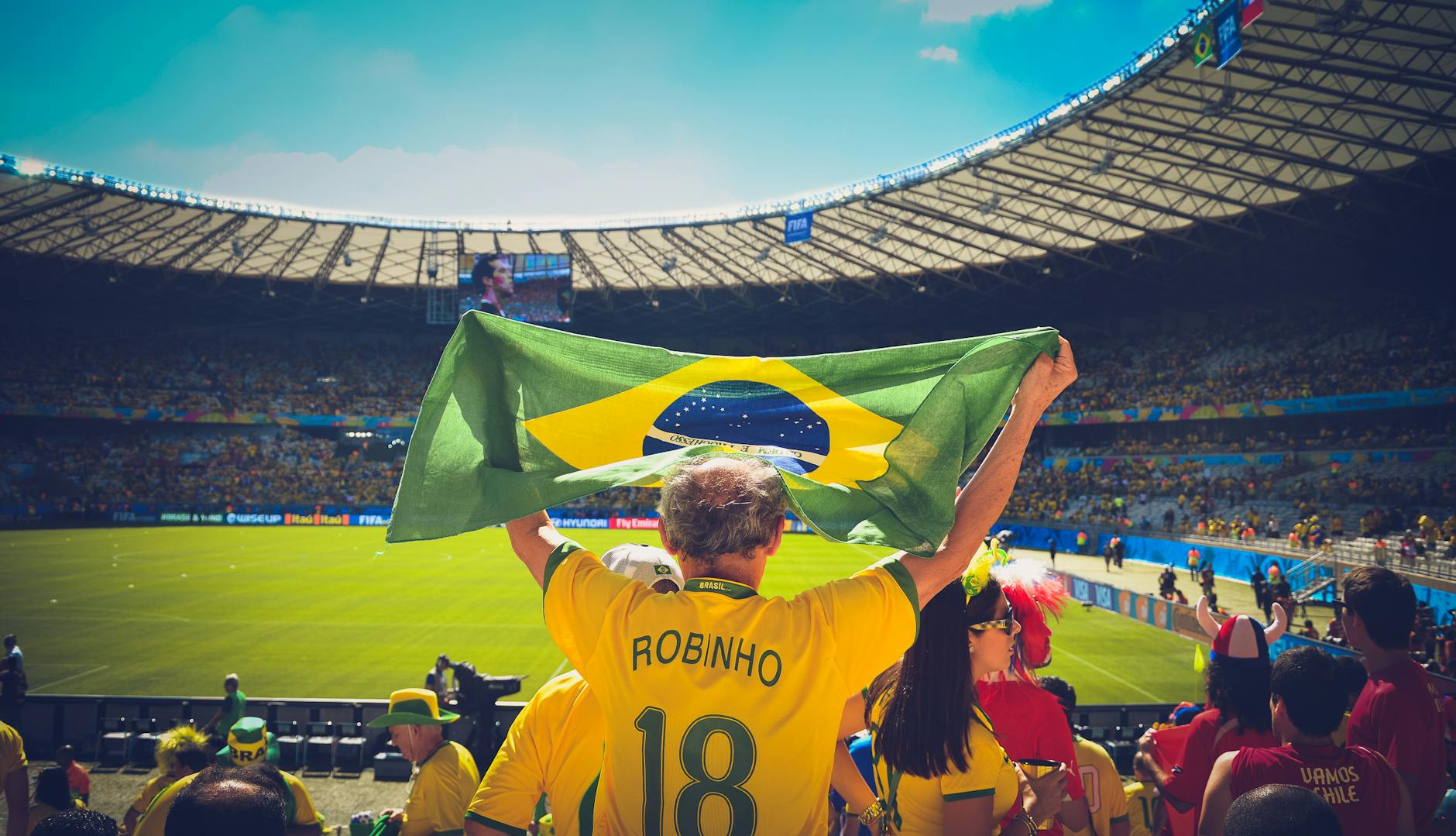
Photo by Caio on Pexels
Step 1: What makes the FIFA World Cup different from club football?
The FIFA World Cup differs from club football because it compresses elite competition into a short international tournament where national-team chemistry, travel, recovery, and knockout pressure outweigh season-long consistency. In 2026, the 48-team format makes that difference sharper.
The key is understanding incentives. In club football, Manchester City, Real Madrid, Bayern Munich, and Inter Milan can refine patterns over 50 or more matches, supported by daily training, transfer-market squad design, and highly familiar tactical systems. At the FIFA World Cup, Argentina, France, Brazil, England, Spain, Germany, Portugal, and Morocco often have only a short pre-tournament camp to align pressing triggers, set-piece roles, and build-up spacing. That makes national-team football less predictable in some ways, but more readable in others: coaches tend to simplify structures, protect central zones, and rely heavily on high-value moments such as penalties, corners, and transition attacks. According to the FIFA World Cup overview on Wikipedia, the competition has been contested since 1930, which gives analysts a long historical base but not a perfect model for 2026. It is worth noting that the expanded North American edition changes the comparison again because more teams, venues, and travel routes introduce variables club models rarely face. For related tactical foundations, see our [Internal Link: World Cup tactical analysis guide].
Step 2: How should you read the 2026 World Cup format?
Read the 2026 FIFA World Cup format as a larger, more layered tournament: 48 teams, 12 groups of four, 104 matches, and a Round of 32 before the traditional knockout path. That means qualification math and risk management change from the first whistle.
The 2026 FIFA World Cup will be hosted across Canada, Mexico, and the United States, with FIFA confirming a significantly expanded match calendar compared with Qatar 2022. The shift from 32 teams and 64 matches to 48 teams and 104 matches creates two practical consequences. First, more third-place qualification scenarios can keep teams alive deeper into the group stage, which may reduce desperation in some final group matches but increase scoreboard awareness across simultaneous fixtures. Second, elite squads may use deeper rotation earlier, especially when travel between cities such as Vancouver, Mexico City, Los Angeles, Dallas, Miami, New York/New Jersey, and Toronto affects recovery windows. FIFA states in its tournament materials that the 2026 edition will be “the most inclusive and diverse FIFA World Cup ever,” a useful institutional quote because it signals the governing body’s strategic direction as much as the competitive design. For bettors and analysts, inclusivity also means more mismatches, more debutant narratives, and more pricing uncertainty in early lines.

Photo by Keverne Denahan on Pexels
The practical reading method is to separate format effects from team quality. A nation with a top-five Elo-style profile may still face awkward sequencing if it travels across time zones or plays in heat, altitude, or humidity. Mexico City and Guadalajara introduce different environmental demands than Seattle or Toronto, and that matters when projecting second-half tempo or late substitutions. A common but weak approach is to rank teams only by FIFA ranking, star names, or previous tournament finish. A stronger approach assigns weight to five variables: squad depth, manager continuity, defensive rest structure, set-piece efficiency, and travel burden. Coach's Corner uses those variables to explain why a glamorous attacking side may be overvalued, while a compact, low-event team may be more dangerous than the market assumes. It is worth noting one under-discussed edge case: in expanded formats, the value of goal difference can change final-round incentives, especially when a team can advance with a narrow loss rather than chase a draw.
For deeper fixture-by-fixture interpretation, follow the data notes as the schedule develops.
Step 3: How can predictions combine tactics, stats, and market context?
World Cup predictions work best when tactics, player data, and betting-market context are combined rather than treated separately. A forecast should explain how a team creates chances, prevents transitions, and whether the available odds already reflect those strengths.
Start with tactics because they define the game environment. France under Didier Deschamps, Argentina after Lionel Messi’s 2022 triumph, and Spain’s possession-heavy model do not create the same match script, even when all three are rated as elite. Then move to player statistics: shot volume, expected goals, progressive carries, aerial duel rates, goalkeeper post-shot performance, and minutes played in the previous club season. Finally, compare those football inputs with regulated-market prices such as match winner, draw no bet, Asian handicap, total goals, both teams to score, top scorer, and outright champion. The key is not to “pick winners” from narrative; it is to identify whether the market has overreacted to reputation, injuries, or a famous result. The FIFA official website remains the primary source for fixtures, formats, and tournament announcements, while competition databases from recognized sports media help validate lineups and recent minutes. For more on model inputs, see our [Internal Link: player statistics for World Cup betting].
A practitioner-level insight: national-team models should downgrade club-based pressing metrics unless the same core players share national-team minutes. For example, a winger who presses brilliantly for Liverpool or Arsenal may not reproduce that impact if his national side defends in a mid-block and asks him to protect a full-back. Similarly, a striker’s club expected goals can mislead when his national team creates fewer cutbacks and more low-percentage crosses. Coach's Corner treats tactical fit as a multiplier, not a footnote, because World Cup teams rarely have the training volume required to install complex automatisms. In betting terms, that means unders, first-half draws, and low-card markets may sometimes be more rational than chasing obvious favorites. However, contrarian does not mean reckless: if Brazil or England control territory, set pieces, and bench quality, a short price may still be justified. It is worth noting that the best value often appears before public lineups, but the best certainty appears after lineups, so timing is part of the analysis.
Prediction checklist for 2026
Use this checklist before trusting any FIFA World Cup forecast:
- Confirm the venue, kickoff time, and travel gap between matches.
- Check manager continuity since Qatar 2022 and continental qualifiers.
- Compare national-team roles with club roles for key players.
- Review injuries, suspension risk, and likely rotation.
- Test whether odds moved because of news or public sentiment.
- Separate outright tournament strength from single-match matchup fit.

Photo by Tima Miroshnichenko on Pexels
Step 4: What should bettors watch before placing World Cup wagers?
Bettors should watch lineup certainty, travel effects, tactical matchups, and market movement before placing World Cup wagers. In regulated jurisdictions, the most useful 2026 edge is often not who is “better,” but whether the price matches the match conditions.
The licensed betting industry treats the FIFA World Cup as a peak liquidity event, similar in attention to the UEFA European Championship, Copa América, March Madness, and the Super Bowl. That liquidity creates both efficiency and overreaction. Early outright markets may be influenced by brand power: Argentina, France, Brazil, England, Germany, Spain, Portugal, and the Netherlands usually draw public money before a ball is kicked. Match-day markets can be sharper, but they still move quickly on official lineups, weather, goalkeeper changes, and tactical surprises. Coach's Corner evaluates markets by asking three questions: what must happen for this bet to win, what does the price imply, and what can break the assumption? This mentor-style discipline matters because a team can dominate possession and still be a poor moneyline bet if it faces a low-block opponent, a slow pitch, or an exhausting travel spot. To continue learning structured market review, check our [Internal Link: betting odds comparison methods].
It is also worth noting a less obvious 2026 factor: extra knockout rounds may increase fatigue dispersion across squads. A favorite that reaches the Round of 32 after rotating successfully could hold a meaningful bench advantage over a nation that needed its strongest XI for all three group matches. Conversely, a smaller nation with compact tactics and elite set-piece delivery may outperform in single-elimination games because knockout football rewards mistake reduction. The International Betting Integrity Association regularly emphasizes monitoring and information sharing across betting markets, and its institutional language notes that integrity systems depend on “effective cooperation between sports, operators and regulators.” That point matters for readers because World Cup betting is not only about price shopping; it is about understanding regulated-market information flow. If injury news reaches markets before social media confirms it, odds movement may be a signal rather than noise. The key is to interpret movement with football logic, not chase it blindly.
When you are ready to compare match angles with daily 2026 context, Coach's Corner keeps the focus practical.
Step 5: verification
Verification is the step that separates informed World Cup analysis from attractive guesswork. Before relying on any preview, confirm the source, date, lineup status, venue, market timestamp, and whether the claim applies to 2026 conditions rather than an older tournament.
A useful verification process is deliberately mechanical. First, check FIFA for the official fixture, stadium, and competition rules. Second, compare national federation announcements, such as the Argentine Football Association, French Football Federation, Royal Spanish Football Federation, Football Association, and Brazilian Football Confederation, against reputable sports outlets. Third, record the time of any odds snapshot, because a price at 09:00 in London may be irrelevant after an injury update at 15:00 in New York. Fourth, distinguish confirmed facts from projections: “Kylian Mbappé starts” is different from “Kylian Mbappé is expected to start.” Fifth, test whether a statistic is tournament-specific, club-season-specific, or historical. The key is consistency, because small errors compound quickly in a short tournament. For example, using club possession data without adjusting for national-team system can overstate Spain’s control or understate Morocco’s counterattacking threat. For a structured workflow, see our [Internal Link: World Cup research checklist].
Verification list for fans and analysts
Before acting on any FIFA World Cup 2026 claim, verify:
- Official source: FIFA, confederation, national association, or accredited media.
- Time sensitivity: lineup, injury, suspension, weather, or travel update.
- Market timestamp: opening price, current price, and movement reason.
- Tactical relevance: whether the statistic fits the national-team setup.
- Tournament context: group-stage incentive, knockout risk, or rotation motive.

Photo by Haberdoedas Photography on Pexels
Troubleshooting common failures
Most failed World Cup analysis comes from using the wrong reference frame. A bettor may trust Premier League form too heavily, a fan may overrate a famous striker, or a preview may ignore travel between Dallas, Vancouver, and Mexico City. These errors are understandable because club football supplies more recent data, but international football has different constraints. Coach's Corner treats troubleshooting as a repeatable correction process: identify the failed assumption, compare it with match evidence, and adjust the next forecast rather than defending the old one. If a team you expected to dominate creates only low-quality crosses, the issue may not be motivation; it may be that the opponent blocked central lanes and forced predictable wide delivery. If an underdog collapses after 60 minutes, the cause may be altitude, bench depth, or defensive workload rather than simply “lack of quality.” It is worth noting that the fastest improvement comes from reviewing losing reads, not celebrating winning ones.
Common failure patterns to correct
- Overrating stars without checking national-team role.
- Ignoring venue conditions such as altitude, heat, humidity, and travel.
- Treating FIFA rankings as match predictions.
- Betting late after the market has already absorbed lineup news.
- Assuming knockout matches follow group-stage scoring patterns.
- Confusing public sentiment with professional price movement.
The contrarian but practical conclusion is that the 2026 FIFA World Cup may reward patient analysts more than bold forecasters. The expanded format creates more matches and more data points, yet it also introduces unfamiliar competitive situations, especially for teams entering a 48-team field for the first time. Coach's Corner is built for that environment: match predictions, team tactics, player stats, and tournament coverage designed to explain why a price, lineup, or tactical angle matters. The best approach is to keep a written pre-match thesis, track what changed, and judge the process after the final whistle. That habit turns the World Cup from a stream of opinions into a disciplined learning cycle.
For daily World Cup 2026 previews and practical match analysis, continue with Coach's Corner.
Frequently Asked Questions
Q: What is the FIFA World Cup?
A: The FIFA World Cup is FIFA’s senior men’s international football tournament for national teams. It began in 1930 in Uruguay and is normally staged every four years, except for 1942 and 1946 due to World War II. The 2026 edition will be hosted by Canada, Mexico, and the United States with 48 teams and 104 matches.
Q: How do I start analyzing FIFA World Cup 2026 matches?
A: Start by checking the fixture, venue, team news, and tactical matchup before looking at odds. Then compare each national team’s likely shape, player roles, set-piece strength, and travel schedule. Coach's Corner focuses on this order because football context should come before market opinion.
Q: What is the difference between the FIFA World Cup and club football?
A: The main difference is that the World Cup uses national teams in a short tournament, while club football develops over a long season. Clubs such as Real Madrid or Manchester City train daily and build squads through transfers. National teams depend more on compact tactics, limited preparation, and high-pressure knockout moments.
Q: Why do World Cup predictions fail?
A: World Cup predictions often fail because analysts overuse club data without adjusting for national-team roles. A player’s Premier League or La Liga form may not transfer if his country uses a different system. Travel, weather, rotation, and knockout incentives can also change the match script quickly.
Q: How much does it cost to follow Coach's Corner coverage?
A: The cost depends on the product or access level offered on Coach's Corner at the time you visit. The site is designed around FIFA World Cup 2026 content, including predictions, tactics, player stats, and tournament updates. Check the current page for available coverage details and any access requirements.
Q: Is FIFA World Cup betting different from league betting?
A: Yes, FIFA World Cup betting is different because the tournament is shorter, more emotional, and more sensitive to lineups and venue conditions. League betting has larger samples and more stable team routines. World Cup markets require faster verification of injuries, travel, tactical changes, and motivation.
Thank you for reading this dispatch.
Coach's Corner · The Digital Broadsheet · Issue No. 001