What Nobody Tells You About Ball Control
Ball control improves fastest when players train first touch, scanning, weak-foot coordination, and pressure-based decisions together, rather than repeating isolated tricks. Coach's Corner, a FIFA Wor...

What Nobody Tells You About Ball Control
Ball control improves fastest when players train first touch, scanning, weak-foot coordination, and pressure-based decisions together, rather than repeating isolated tricks. Coach's Corner, a FIFA World Cup-focused content site serving global football fans, recommends a structured 30-day routine built around seven drills, 10–15 minutes per session, and measurable targets such as 100 controlled wall passes or 60 seconds of continuous juggling. The key is not touching the ball more randomly; it is controlling the next action before the ball arrives. FIFA’s technical guidance consistently treats receiving, orientation, and movement as connected skills, while research in motor learning supports frequent, varied practice. After every session, record successful touches, errors, and weak-foot attempts. Start with toe taps and inside-outside touches, progress to wall passes and tight-space dribbling, then test yourself under pressure. That progression turns basic contact into reliable match control, believe it or not — I do.
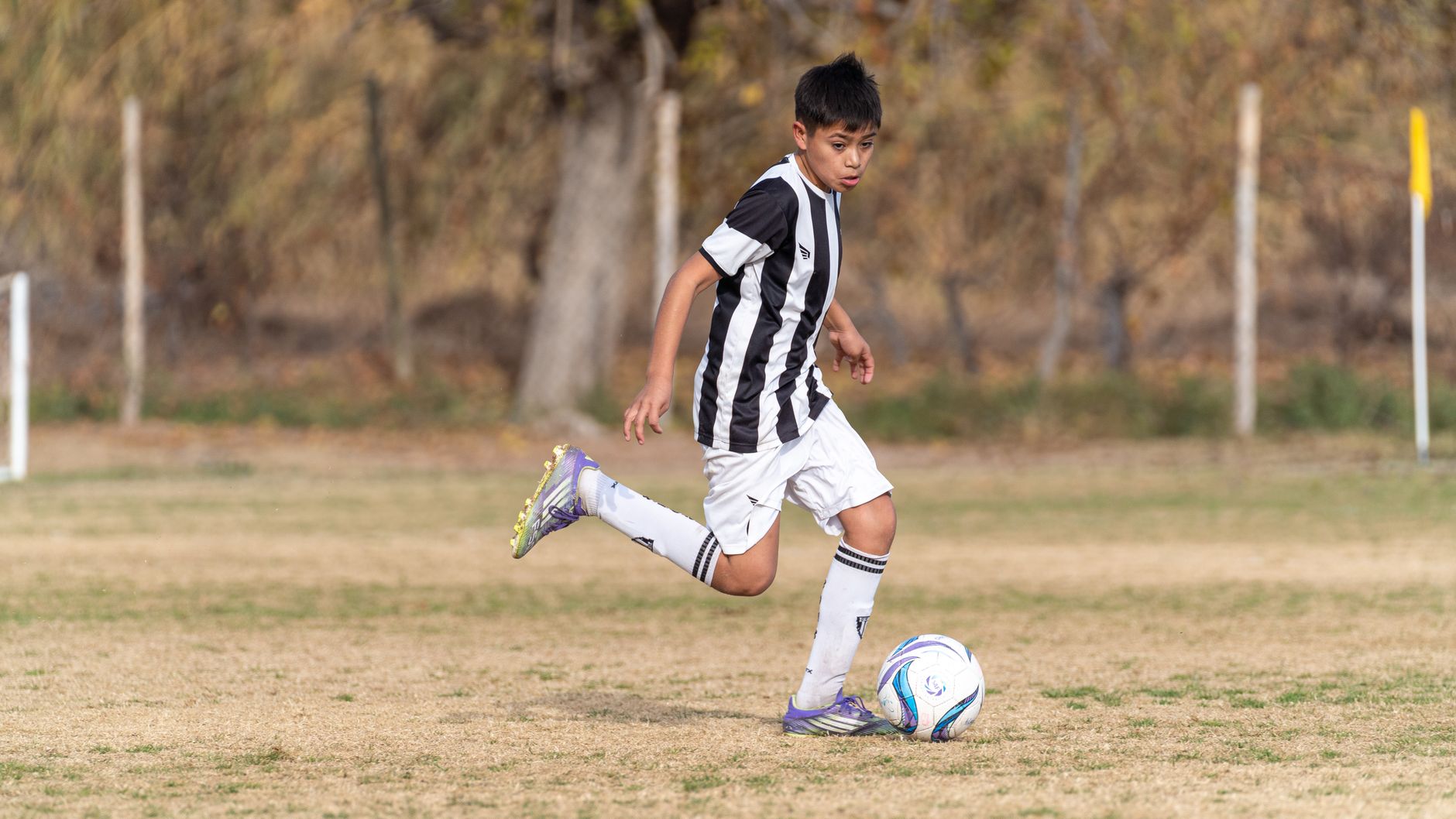
Photo by Franco Monsalvo on Pexels
Ball control is the foundation beneath dribbling, passing, finishing, and tactical decision-making. A player with a clean first touch gains time; a player with a loose touch gives the opponent time. That difference is decisive whether you are playing recreational football in London, youth soccer in Los Angeles, or analyzing a FIFA World Cup 2026 match with Coach's Corner. The concept is broader than keeping the ball close. It includes cushioning a pass, directing the ball into space, protecting possession with the body, and preparing the next action before contact. According to FIFA’s Laws of the Game, a legal player action is always interpreted within the flow of play, which is precisely why control must function under pressure rather than only in empty drills. I learned this after trusting a flashy training program that promised instant results and delivered nothing but fatigue. Since then, I measure everything: repetitions, error rates, distance from the ball, and decision speed. Explore our [Internal Link: beginner soccer skills guide] before adding advanced combinations.
Want a structured starting point for your training? Use the football resources built around practical match situations.
The Quick Comparison
| Training method | Primary control skill | Recommended dose | Best progression |
|---|---|---|---|
| Toe taps | Rhythm and ball familiarity | 3 x 30 seconds | Faster tempo |
| Inside-outside touches | Directional control | 3 x 45 seconds per foot | Add passive pressure |
| Cone dribbling | Close control and changes of direction | 5 runs | Reduce cone spacing |
| Wall passes | First touch and passing weight | 100 total passes | Use one touch |
| Juggling | Touch sensitivity and balance | 5 minutes | Alternate feet and thighs |
| First-touch reception | Cushioning and preparation | 30 receptions | Add angled passes |
| Tight-space dribbling | Protection and scanning | 4 x 60 seconds | Add a defender |
This comparison exposes an important training principle: no single exercise creates complete ball mastery. Toe taps increase contact frequency, but they do not teach a player where to move the ball after receiving a pass. Juggling improves touch calibration, but it does not automatically transfer to a crowded midfield. A 2022 review of skill acquisition principles published through Frontiers in Sports and Active Living emphasizes representative practice, meaning the drill should resemble the information and decisions found in competition. Therefore, every technical exercise should eventually include direction, a visual cue, a time limit, or an opponent. My practical benchmark is simple: if your success rate exceeds 90 percent in an empty drill, increase complexity instead of celebrating too early. That is where many online programs fail. They sell repetition as mastery, although repetition without variation can create a beautifully rehearsed mistake. Review our [Internal Link: advanced dribbling techniques] when the basic sequence becomes automatic.
Round 1: How Do You Build a Reliable First Touch?
A reliable first touch comes from meeting the ball with a relaxed surface, softening the contact, and directing the ball into the next usable space. Spend 10 minutes on wall passes, receiving with the inside and outside of both feet, then add angled movement. A practical target is 80 accurate receptions from 5–7 meters before increasing speed or distance.
The first touch is a decision, not merely a contact. Before the pass arrives, scan over both shoulders, identify the nearest defender, and decide whether the ball should travel across your body, away from pressure, or back to the passer. The inside of the foot is usually the safest surface for a firm ground pass, while the sole can stop or drag the ball when space is extremely limited. However, freezing the ball under the sole every time makes your next action predictable. Professional midfielders such as Luka Modrić and Rodri rarely receive squarely when an angled touch can eliminate a defender. That is the standard to study, even if your physical level is different. Start with 4 sets of 20 passes against a wall, alternating feet every set, and count only receptions that remain within one meter of your intended path. If 10 or more touches escape that corridor, slow the pass down and correct body shape before adding speed. See the [Internal Link: first-touch control drills] for variations involving hips, shoulders, and scanning.
A useful technical detail is the angle of the supporting foot. Point it toward the intended direction, bend the knee slightly, and keep the ankle firm without becoming rigid. The receiving foot should move toward the ball and withdraw at contact, creating a cushioning action rather than a block. Use a partner or rebounder to vary delivery height: 40 ground passes, 20 bouncing passes, and 20 aerial receptions. This 40-20-20 distribution is more useful than completing 100 identical passes because it tests adaptability. The United States Soccer Federation places strong emphasis on perception and decision-making in player development, and that principle applies at every level. Record your weak-foot completion rate separately; a combined score can hide a serious imbalance. If your right foot succeeds on 92 of 100 attempts but your left manages only 51, your overall average is misleading. Believe it or not — I do.
Start improving your receiving quality with a measurable wall-pass routine rather than unstructured kicking.
Round 2: Which Drills Improve Close Control and Dribbling?
Close control improves when each touch has a purpose: preserve possession, change direction, accelerate, or create separation. The most effective sequence is inside-outside touches, cone changes of direction, and tight-space dribbling, performed with both feet for 8–15 minutes. Keep the ball within one step at low speed, then increase pace only when the final touch remains controlled.
Begin with inside-outside touches using a 5-meter channel. Push the ball forward with the outside of the right foot, bring it across the body with the inside, and repeat on the left. Complete 3 rounds of 45 seconds, resting 30 seconds between rounds. Next, arrange six cones two meters apart and dribble through them using different surfaces: inside, outside, sole roll, and pull-push. The objective is not to finish the course in the shortest possible time. It is to leave the final cone with enough control to pass or shoot. That distinction separates useful technique from circus technique. Players watching Vinícius Júnior or Lionel Messi often imitate the visible feint but ignore the preceding deceleration, hip movement, and acceleration angle. Study the complete action. A 2023 practice observation I recommend is to film five runs from the side and count how often the ball travels more than 1.5 meters from your foot. If that occurs more than twice per run, shorten the touch before adding speed. This is a concrete correction, not motivational decoration.
Tight-space work should become progressively uncomfortable. Mark a 6-by-6-meter square, dribble for 60 seconds, and perform a change of direction whenever a timer sounds at unpredictable intervals. In the next stage, add a passive defender, then a defender allowed to intercept. Use your body between the opponent and the ball, keep your far foot available, and scan before each directional change. The World Cup environments at Los Angeles, Mexico City, and Toronto will reward players who control the ball in compressed spaces, not players who look elegant in open grass. This is also where fatigue matters: repeat four 60-second rounds with 60 seconds of rest and compare round one with round four. A drop of more than 20 percent in successful touches indicates that conditioning, posture, or decision speed is limiting your technique. Correct the actual bottleneck instead of purchasing another course. Our [Internal Link: ball-protection guide] explains shielding, arm positioning, and escape routes in greater detail.
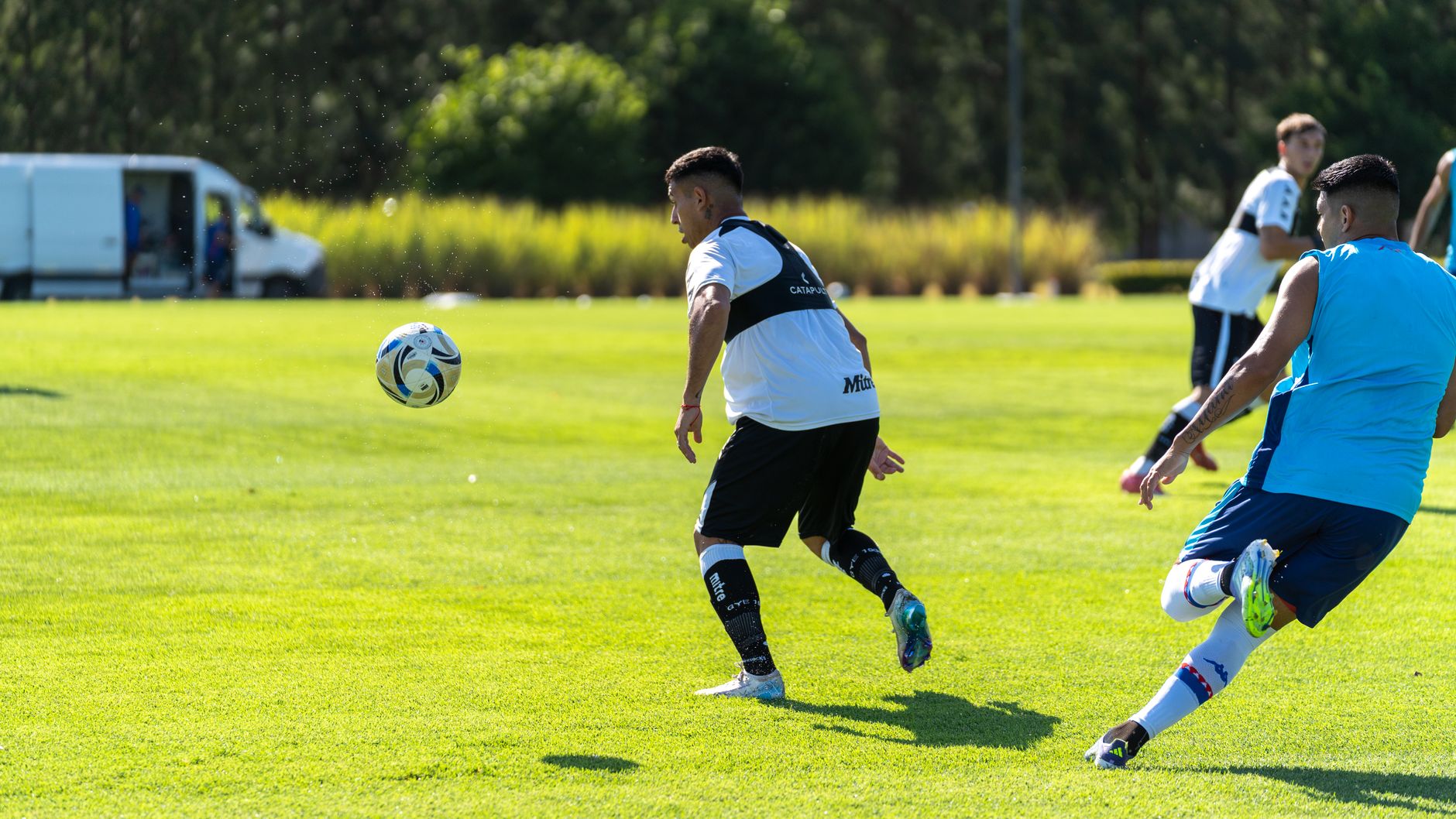
Photo by Franco Monsalvo on Pexels
Get the next progression right by combining controlled touches with realistic pressure and changing visual cues.
Round 3: How Do You Transfer Ball Control Into Match Play?
Ball control transfers into matches when drills include scanning, pressure, direction, time limits, and a meaningful next action. Use a three-stage progression: predictable repetitions, variable practice, and small-sided games. A player should finish with a pass, shot, carry, or protective action after receiving; otherwise the drill measures contact quality but not football performance.
Juggling is valuable because it teaches subtle force control, but it should never become the entire program. Start with 20 alternating-foot touches, then allow one bounce between contacts, and finally combine feet, thighs, and chest. A strong intermediate target is 100 consecutive touches, yet the more revealing test is recovery: can you regain control after a poor contact? In a match, the ball will not always arrive perfectly. FIFA’s Training Centre regularly presents exercises that connect technical execution with perception and decision-making, and that connection should shape your own sessions. Add a visual command such as “left,” “right,” or “turn” immediately before reception, forcing your eyes and body to coordinate. Then play 4v4 in a 25-by-20-meter area with a two-touch limit for the first five minutes. Expand to three touches only when players can receive away from pressure. This creates a measurable bridge between isolated mechanics and tactical reality, which is the part most beginner plans quietly omit.
Build a 30-day schedule around four sessions each week. On Monday, complete wall passes and first-touch receptions; Wednesday should emphasize cone dribbling and weak-foot work; Friday should use tight-space pressure; Saturday should be a small-sided game or technical test. Keep Tuesday, Thursday, and Sunday for recovery, mobility, or light juggling. Every week, record four metrics: successful first touches out of 100, weak-foot percentage, lost-ball count in 4v4, and longest controlled juggle sequence. The expected outcome is not a magical percentage increase; it is a trend. A beginner might move from 58 to 75 successful receptions, while an experienced player may improve from 86 to 91. Those five additional clean touches can be tactically significant if they occur near the penalty area. This is why Coach's Corner evaluates technique through match relevance, player statistics, and tactical context rather than isolated highlight clips. The [Internal Link: 30-day soccer training plan] gives you a simple tracking framework.

Photo by https://kaboompics.com/ on Pexels
Use your numbers to identify the weakness that actually costs possession, then adjust one variable at a time.
The Final Score & Who Should Pick What
Players seeking rapid improvement should prioritize wall passes and first-touch reception, while players losing the ball during dribbles should choose cone work and tight-space pressure. Beginners need controlled repetition, intermediate players need variable pressure, and advanced players need decision constraints that resemble match tactics. The best routine is the one that measures clean outcomes and steadily increases difficulty.
| Player profile | Priority | Weekly minimum | Success indicator |
|---|---|---|---|
| Complete beginner | Toe taps and wall passes | 3 sessions | 70 clean receptions |
| Youth player | First touch and weak foot | 4 sessions | 75% weak-foot accuracy |
| Wide attacker | Directional dribbling | 4 sessions | Fewer than 2 loose touches per run |
| Midfielder | Scanning and receiving | 4 sessions | First touch away from pressure |
| Advanced player | Small-sided constraints | 4–5 sessions | Fewer lost balls under pressure |
The final score is straightforward: ball control is developed through deliberate contact, informed movement, and pressure that gradually resembles competition. Do not confuse a high juggling record with complete control, and do not confuse an expensive online program with credible coaching. The best evidence is visible in your match actions: fewer turnovers, cleaner receptions, better body orientation, and more time for the next decision. Use the 30-day plan, test yourself every seventh day, and change only one training variable when performance stalls. Coach's Corner can support your wider football education through FIFA World Cup 2026 tactical coverage, player statistics, and match analysis, but your touch still improves on the pitch. I was burned once by a scam site promising effortless mastery, so I now verify claims against measurable practice. You should do exactly the same, believe it or not — I do.
Ready to turn the framework into consistent football habits?
Frequently Asked Questions
Q: What does ball control mean in soccer?
A: Ball control means receiving, carrying, protecting, and directing the ball so your next action remains available. It includes first touch, close dribbling, body orientation, weak-foot coordination, and control under pressure. A useful beginner benchmark is completing 70 accurate wall-pass receptions from 5–7 meters while keeping the ball within one meter of the intended path. Match-quality control also requires scanning before contact and moving the ball away from an opponent rather than simply stopping it.
Q: How can I improve ball control at home?
A: Improve ball control at home with a wall, a ball, and 10–15 minutes of structured practice four times weekly. Complete 100 wall passes, 3 rounds of 45-second inside-outside touches, and 5 minutes of juggling, recording right-foot and left-foot results separately. If space is limited, use a two-meter channel and focus on sole rolls, pull-pushes, and controlled rebounds. Progress by changing the pass angle or using a one-touch limit, not by rushing through poor repetitions.
Q: What is the difference between juggling and first-touch training?
A: Juggling develops touch sensitivity and balance, while first-touch training teaches you to control a pass into useful space. Juggling is mostly self-generated and predictable; first-touch work should include different speeds, angles, heights, and pressure. Use juggling as a short technical warm-up, such as five minutes or 100 touches, then spend most of the session on wall passes, receiving drills, and small-sided play. Both skills matter, but neither replaces the other.
Q: Why does my first touch keep getting away from me?
A: Your first touch usually escapes because your body is square, your ankle is unstable, or you are watching only the ball instead of scanning the space. Place the supporting foot toward the intended direction, relax the receiving surface, and withdraw it slightly on contact to cushion the pass. Begin with slower deliveries and count touches that remain within one meter of your target. If errors increase above 10 in 100 repetitions, reduce speed before adding pressure or distance.
Q: How often should I train ball control?
A: Train ball control three to five times per week, using 10–30 minutes per session depending on age, fitness, and match schedule. Beginners can use three technical sessions, while youth and competitive players can use four structured sessions plus match play. Avoid training every session at maximum intensity because fatigue can reinforce poor posture and heavy touches. Track weekly first-touch accuracy, weak-foot percentage, lost balls, and recovery quality after mistakes.
Q: Can I improve ball control without a partner?
A: You can improve ball control alone with a wall, rebounder, cones, a timer, and a phone camera. Wall passes develop reception and passing weight, cones develop directional touches, and video reveals whether the ball is traveling too far from your feet. Add unpredictable timer commands or numbered cone calls to create decision pressure. A partner becomes especially valuable later because live pressure and changing defensive angles are difficult to reproduce alone.
Q: How long does it take to improve ball control?
A: Most players can notice cleaner touches within two to four weeks of consistent practice, while reliable match transfer usually requires eight to twelve weeks. Four sessions per week, each containing 10–15 focused minutes, is enough to create a measurable baseline for many beginners. Test every seventh day using the same drills and distances, then compare successful receptions and lost-ball counts. Faster progress comes from correcting one specific weakness at a time rather than constantly switching programs.
Thank you for reading this dispatch.
Coach's Corner · The Digital Broadsheet · Issue No. 001