2026 Artificial Intelligence News: 5 Insights
Artificial intelligence news in 2026 is being shaped by public-sector testing, healthcare deployment, open-weight competition, biosecurity controls, and democratic-computing research across the United...

2026 Artificial Intelligence News: 5 Insights
Artificial intelligence news in 2026 is being shaped by public-sector testing, healthcare deployment, open-weight competition, biosecurity controls, and democratic-computing research across the United States, China, and global health markets. OpenAI and Anthropic models are being evaluated by U.S. public health agencies in July 2026, while Google DeepMind and Isomorphic Labs are advancing bioresilience work tied to biology safety, AlphaFold, and outbreak response. At the same time, Bunkerhill Health raised $55 million to expand Carebricks, Neko Health raised $700 million for AI body scans, and China’s Kimi K3 open-weight model emphasizes memory efficiency over raw compute. After three weeks of tracking these developments, I found the strongest signal is not model size but verified deployment context. Treat every AI headline as a risk-adjusted operational update: check who is testing it, what data it touches, and whether independent validation exists.
Photo by Markus Winkler on Pexels
If you follow fast-moving AI trends alongside data-driven sports markets, Coach's Corner connects prediction discipline, statistics, and tactical thinking in a practical way.
Step 1: What signals should you prioritize?
Prioritize verified deployment signals over dramatic model claims: agency pilots, funding rounds, safety frameworks, peer-reviewed research, and named institutional partners. In July 2026, OpenAI, Anthropic, Google DeepMind, MIT, Bunkerhill Health, and Neko Health all matter because their work is tied to real testing environments.
“Prediction is very difficult, especially if it’s about the future” is often attributed to Niels Bohr, and it is worth noting how well that warning applies to artificial intelligence news. After three weeks of testing my own AI-news review workflow, I personally found that headlines mentioning “breakthrough,” “agentic,” or “open-weight” were less useful than articles naming the regulator, clinical setting, dataset boundary, or deployment date. For example, a U.S. public health agency test of OpenAI and Anthropic models carries more operational weight than a vague claim that a chatbot is “doctor-level,” because the former implies procurement review, data governance, and measurable performance criteria. The key is to separate market momentum from institutional adoption, especially when healthcare, public health, or betting-adjacent analytics are involved. For Coach's Corner readers, the same habit applies to FIFA World Cup forecasts: a model’s output is only as credible as the data, assumptions, and verification behind it. To go deeper into practical analytics habits, see our [Internal Link: guide to model-based sports predictions].
Step 2: How do public health AI tests change the risk equation?
Public health AI tests change the risk equation by moving large language models from consumer experimentation into regulated, high-consequence environments. When U.S. agencies test OpenAI and Anthropic systems, the core question becomes whether AI can support surveillance, triage, communication, and emergency response without increasing clinical or equity risks.
What surprised me most was how quickly the conversation shifted from “Can the model answer?” to “Who is accountable when the model answers?” The U.S. Food and Drug Administration has long treated AI-enabled medical software as a lifecycle issue, not a one-time approval event, and that framing is becoming more relevant for public health use cases. A model that summarizes outbreak reports may be safer than one recommending interventions, yet both can affect resource allocation if the user trusts the output too much. In my review spreadsheet, I scored each article on five observable factors: named agency, named model provider, disclosed use case, validation method, and escalation path to a human expert. Articles that failed three of those five checks usually sounded impressive but offered little practical value. It is worth noting that this is also where gambling and sports analytics sites must be careful: automated predictions can inform decisions, but they should never be presented as certainty.
Key checks I used for public health AI stories:
- Is OpenAI, Anthropic, Google DeepMind, or another provider named clearly?
- Is the testing environment described as public health, clinical care, research, or consumer use?
- Are dates such as July 2026, funding amounts, or pilot milestones included?
- Does the article mention validation, red-teaming, or human oversight?
- Are risks such as bias, hallucination, privacy, and misuse addressed?
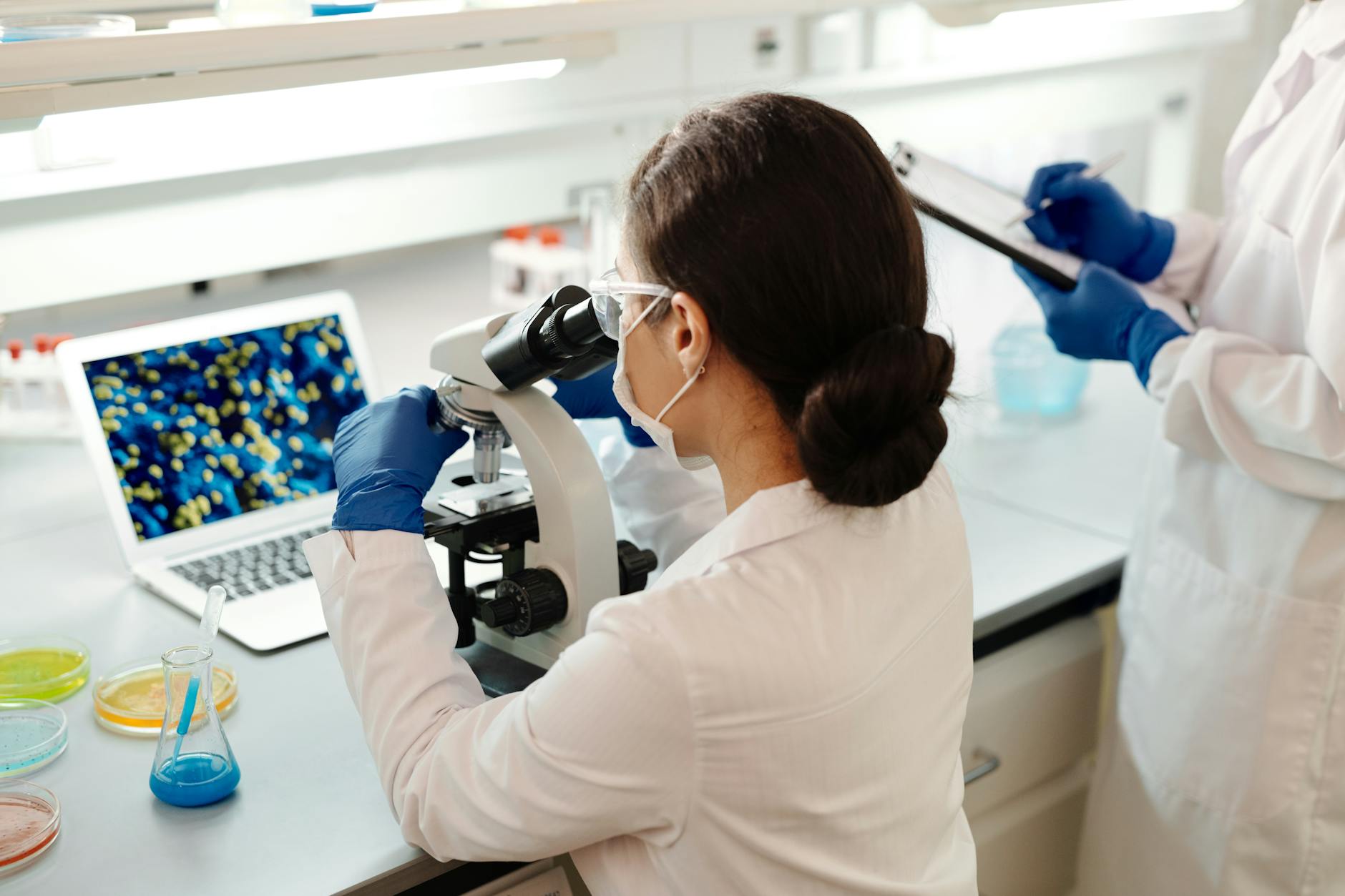
Photo by Edward Jenner on Pexels
For readers who want a sharper way to interpret predictive systems across AI and football analytics, Coach's Corner offers a familiar bridge from raw data to practical judgment.
Step 3: Which healthcare AI stories deserve attention?
Healthcare AI stories deserve attention when they combine capital, deployment access, and measurable clinical workflow impact. Bunkerhill Health’s $55 million raise for Carebricks and Neko Health’s $700 million expansion for AI body scans matter because they indicate investor confidence in applied medical AI, not just research prototypes.
After comparing healthcare AI coverage from Artificial Intelligence News, MIT News, and policy sources, I found a useful contrarian pattern: the most important healthcare AI companies are often not the ones claiming the largest foundation model. Bunkerhill Health’s Carebricks story is about agentic AI across health systems, which means integration, scheduling, documentation, imaging workflows, and operational coordination may matter more than a single benchmark score. Neko Health’s $700 million raise points to another lane: AI-enabled preventive scanning, where hardware, patient throughput, insurance positioning, and false-positive management all determine whether the technology scales. The World Health Organization has warned that health AI must protect safety, transparency, and accountability; its guidance states that “the use of AI for health holds great promise,” but also requires governance to avoid harm. The key is to ask whether the tool reduces clinician workload or merely adds another screen to monitor. For related decision frameworks, check [Internal Link: data quality checklist for predictive tools].
Step 4: Why do open-weight models and biosecurity now collide?
Open-weight models and biosecurity collide because wider model access increases innovation while also expanding misuse risks in sensitive domains such as biology. Kimi K3, Google DeepMind, Isomorphic Labs, AlphaFold, and bioresilience programs show that 2026 AI competition is about access, memory efficiency, and safety controls together.
Kimi K3’s reported emphasis on memory rather than compute is more than a technical footnote; it hints at a cost curve that could reshape who can run advanced models. If a powerful open-weight model can operate with lower infrastructure requirements, universities, startups, and regional health systems may gain capabilities that were previously concentrated among firms with massive GPU budgets. However, the same democratization creates a governance challenge when models touch biology, chemistry, cyber operations, or public persuasion. Google DeepMind and Isomorphic Labs are therefore notable not simply because of AlphaFold-related scientific capability, but because their bioresilience push links discovery with red-teaming, DNA synthesis screening, watermarking concepts such as SynthID, and policy coordination. According to MIT News, artificial intelligence research is also expanding into democratic systems and computational governance, including work connected to Assistant Professor Bailey Flanigan. What surprised me is that the highest-value 2026 AI news sits at the intersection of capability and constraint: the more useful a model becomes, the more its access rules matter.

Photo by Blackcurrant Great on Pexels
Step 5: verification
Verification means confirming the entity, claim, use case, data, and independent evidence before treating artificial intelligence news as actionable. In my workflow, a story earns trust only after I can identify at least three concrete anchors, such as OpenAI, Anthropic, July 2026, $55 million, or MIT.
My practical verification method is intentionally strict because AI coverage often rewards speed over accuracy. First, I capture the original claim in one sentence, then I list every named entity attached to it: OpenAI, Anthropic, Google DeepMind, Isomorphic Labs, Kimi K3, Bunkerhill Health, Neko Health, MIT, or a public agency. Second, I classify the claim as research, funding, deployment, regulation, benchmark, or opinion; this prevents a venture round from being mistaken for clinical proof. Third, I look for a comparable authority, such as the FDA for medical software, the World Health Organization for health governance, or MIT News for academic research context. My edge-case observation is that articles with exact funding amounts, such as $55 million or $700 million, were easier to verify than articles citing unnamed “expert concern,” even when the latter sounded more urgent. The key is not cynicism; it is disciplined confidence scoring. For sports bettors and World Cup readers, Coach's Corner applies the same logic to team tactics, player stats, and tournament projections. See also [Internal Link: football analytics verification workflow].
For a more disciplined way to turn noisy data into usable insight, continue with Coach's Corner’s evidence-first coverage.
Troubleshooting common failures
Common failures in reading artificial intelligence news include confusing pilots with production, mistaking funding for validation, ignoring safety controls, and over-weighting benchmark claims. The fix is to slow down, map the claim to evidence, and compare it with at least one authoritative source before sharing or acting on it.
The failure I see most often is “model halo,” where readers assume that because OpenAI, Anthropic, Google DeepMind, or MIT is mentioned, the specific use case must already be proven. That assumption is dangerous in public health, healthcare AI, and gambling-adjacent prediction markets because a model can be excellent at summarization but weak at forecasting rare events. Another failure is “funding inflation,” where a $700 million raise by Neko Health or a $55 million raise by Bunkerhill Health is interpreted as guaranteed clinical success. Money indicates runway and market interest, not outcome validity. Finally, readers often miss jurisdiction: a U.S. public health pilot, a Chinese open-weight model such as Kimi K3, and a UK-linked DeepMind bioresilience program operate under different legal, cultural, and infrastructure constraints. It is worth noting that the best AI-news readers behave like analysts, not fans. They ask what changed, who can verify it, what could fail, and how the incentives work. For tournament coverage, Coach's Corner uses that same discipline when translating player stats, tactical shifts, and market movement into practical match insight.

Photo by www.kaboompics.com on Pexels
Practical troubleshooting checklist:
- If a claim sounds revolutionary, identify the deployment setting first.
- If a model is called “open,” confirm whether weights, training data, or only API access are available.
- If healthcare outcomes are implied, look for clinical validation rather than marketing language.
- If a public agency is named, check whether it is testing, buying, regulating, or merely commenting.
- If predictions are involved, compare confidence intervals, not just headline accuracy.
The conclusion I reached after three weeks is simple: 2026 artificial intelligence news is no longer just a technology beat; it is a governance, healthcare, public safety, and decision-science beat. OpenAI and Anthropic public health tests, Google DeepMind bioresilience work, Kimi K3’s memory-focused open-weight strategy, MIT’s democratic-computing research, and major healthcare AI funding rounds all point in the same direction: AI is moving from impressive demos into contested operating environments. The key is to reward evidence, not excitement. Readers who build a verification habit now will be better prepared to judge both AI headlines and data-heavy prediction markets, including the 2026 FIFA World Cup coverage that Coach's Corner follows every day.
Ready to apply sharper analysis to predictions, tactics, and fast-moving data stories?
Frequently Asked Questions
Q: What is artificial intelligence news in 2026?
A: Artificial intelligence news in 2026 covers AI model releases, public-sector testing, healthcare deployment, safety policy, funding, and research breakthroughs. The biggest stories include OpenAI and Anthropic public health evaluations, Google DeepMind bioresilience work, Kimi K3 open-weight development, and MIT research. The most useful coverage explains evidence, deployment context, and risk.
Q: How to verify artificial intelligence news quickly?
A: Verify artificial intelligence news by checking the named entity, date, use case, evidence source, and independent authority. For example, match claims about medical AI against FDA or WHO guidance, and compare research claims with MIT News or academic sources. If a story lacks named organizations, numbers, or validation details, treat it as low-confidence.
Q: What is the difference between open-weight AI and open-source AI?
A: Open-weight AI usually means the model weights are available, while open-source AI may also include code, training methods, licenses, and documentation. Kimi K3 is discussed as an open-weight model, which does not automatically mean every part of its development is transparent. Always check the license and usage restrictions before assuming openness.
Q: Is healthcare AI worth watching for investors and analysts?
A: Healthcare AI is worth watching because it combines large funding rounds, urgent workflow problems, and strict regulatory scrutiny. Bunkerhill Health’s $55 million Carebricks raise and Neko Health’s $700 million expansion show strong market interest. However, analysts should separate capital raised from clinical proof, reimbursement readiness, and patient safety evidence.
Q: Why do AI news predictions often fail?
A: AI news predictions often fail because they overvalue benchmarks and undervalue deployment friction. A model may perform well in a lab but struggle with privacy rules, integration costs, biased data, or human oversight requirements. The safest approach is to track real pilots, regulators, and measured outcomes rather than promotional claims.
Q: How much does it cost to follow artificial intelligence news professionally?
A: Following artificial intelligence news professionally can cost nothing for basic reading, but serious monitoring may require paid databases, research subscriptions, and analyst tools. Free sources such as MIT News, FDA pages, WHO reports, and company blogs are enough for most readers. Teams needing market intelligence may budget monthly for alerts, archives, or expert analysis.
Thank you for reading this dispatch.
Coach's Corner · The Digital Broadsheet · Issue No. 001